
PLATMOSPHERE CONTENT HUB
Relive the Energy
Explore all our session recordings,presentations, and key insights.
Keynote
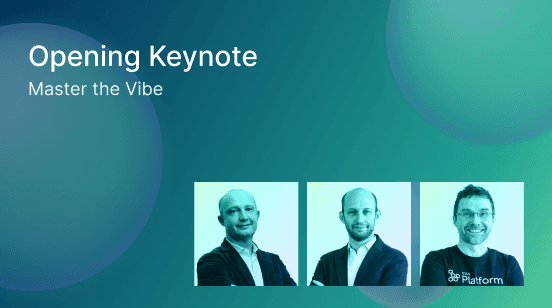
Opening Keynote
As the AI revolution and the 'SaaSpocalypse' reshape the landscape, legacy systems are naturally reaching their limits. We are moving toward Vibe Engineering, where technology is most effective when grounded in context. To ensure productivity remains sustainable amidst new data and regulatory demands, we need a clear, integrated strategy. Transitioning to a Modern IDP allows us to harmonize human expertise and AI within a single workflow. This isn’t just a technical shift, but a cultural evolution—one where we refine our processes and empower our people to truly Master the Vibe.
AI
Platform Engineering
Keynote
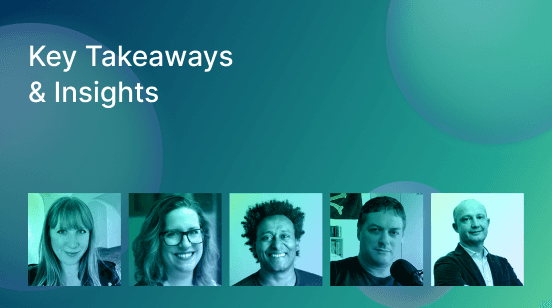
Key Takeaways & Insights
As Platmosphere 2026 comes to a close, let's recap key insights from the event, celebrate the connections made, and look ahead to the future of platform innovation!
AI
Platform Engineering

Keynote
Welcome to Platmosphere 2026
Kickstart your Platmosphere experience with our opening welcome talk! Join us as we set the stage for an exciting event ahead, sharing key insights, highlights, and what to expect throughout the day.
AI
Vibe Engineering
Business
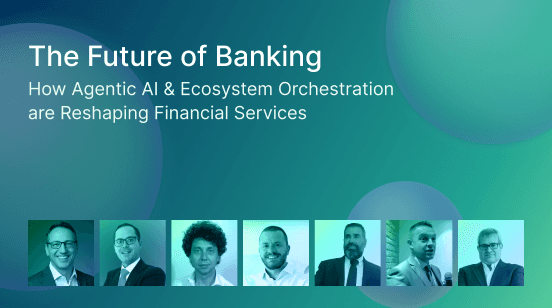
The Future of Banking
The financial services industry is undergoing a profound transformation, driven by the shift toward agentic AI and complex ecosystem orchestration. Moving beyond basic automation to autonomous workflows and seamless cross-platform management, innovation is redefining how banks operate and interact with customers. This round table will bring together industry leaders to explore the key trends shaping the future of banking, the role of fintech collaborations, and the challenges of navigating new regulations such as DORA and the AI Act. Join us to discuss the strategies and technologies that will define the next era of financial services while balancing security, compliance, and user experience in an orchestrated digital world.
Payment
Business
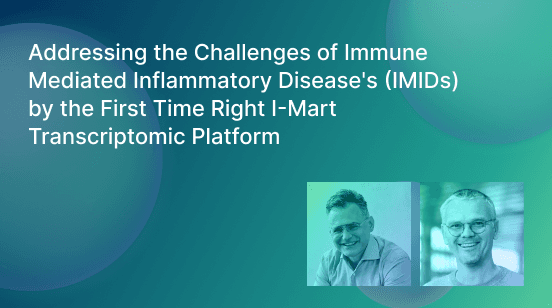
Addressing the Challenges of Imids by the First Time Right I-mart Transcriptomic Platform
Developing Software as a Medical Device (SaMD) for Immune-Mediated Inflammatory Diseases requires a robust, compliant technical foundation. This session explores how First Time Right DX (FTR DX) accelerated the launch of their I-Mart platform by building directly on Mia-Care’s specialized infrastructure. Co-founder Andrea Fiumicelli will share how FTR DX innovates the market by unifying physicians, labs, and bioinformaticians into a seamless, SaMD-compliant workflow. We detail the transition from manual biopsy interpretation to an automated system for longitudinal disease tracking and AI-enhanced decision support. Attendees will learn how I-Mart orchestrates the diagnostic lifecycle—from kit scanning to data analysis—on a natively hosted infrastructure. Discover how this partnership allows innovators to focus on clinical excellence while Mia-Care manages the complexities of scale and regulatory compliance.
Tech
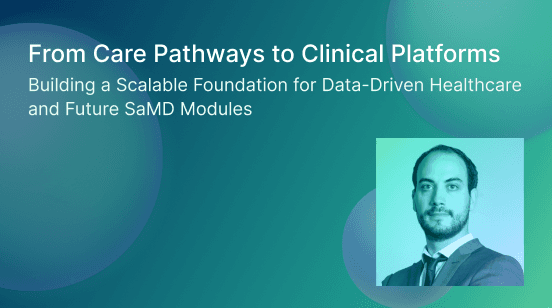
From Care Pathways to Clinical Platforms
Healthcare delivery for chronic and complex conditions remains hindered by fragmented tools, duplicated data entry, and limited coordination across professionals and settings. Jua Pro is a clinical coordination platform enabling integrated, interoperable, and workflow-driven care pathways. It provides healthcare teams with a unified environment to access longitudinal patient data, collaborate in real time, automate administrative tasks, and orchestrate care processes across hospital and community settings. Rather than starting as a medical device, Jua adopts a modular, progressive approach: separating core platform capabilities from future regulated functionalities. This allows rapid deployment of high-value features while preparing a clear roadmap toward the certification of selected modules as Class I and Class IIa Software as a Medical Device (SaMD). This approach is supported by Mia-Care’s platform, which provides a compliant-by-design technical foundation. By leveraging Mia-Care, Jua has been able to accelerate early development and structure its architecture to meet future regulatory requirements without slowing down product iteration. This talk will explore how a platform-first, modular strategy enables faster innovation cycles while maintaining a clear path toward regulatory compliance, and how this paradigm can help bridge the gap between digital health tools and certified medical-grade software.
AI
Vibe Engineering
AI Ready Architecture
Tech
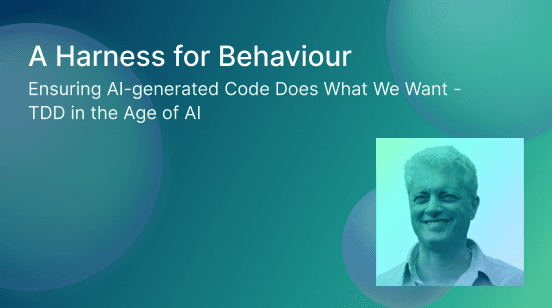
A Harness for Behaviour
How do we know if our application functionally behaves the way we need it to? How do we guide agents so that it does what we need? My colleague Birgitta Böckeler observes: At the moment, most people who give high autonomy to their coding agents do this: - Feed-forward: A functional specification (of varying levels of detail, from a short prompt to multi-file descriptions) - Feed-back: Check if the AI-generated test suite is green, has reasonably high coverage, some might even monitor its quality with mutation testing. Then combine that with manual testing. You might expect that the AI-generated tests are being carefully read and reviewed; after all, they are our first line of defense, aren't they? But in practice, reading a lot of test code is even harder than reading a lot of generated production code. So we end up glancing at the tests and quickly skimming the test names. As a result, many practitioners who are otherwise very proficient with coding agents, are not feeling as confident about behaviour as we might expect. In this presentation, I argue that the problem is not with the tests, but with test-as-code, and I propose test-as-fixtures as a better alternative. There is a convergence of approaches: in the Go testing tradition, most tests are tabular, and the part you will want to read is not the test code, but the table. And when the table grows, it can be moved to text files. Something similar happens in the approval testing tradition, where we use custom printers to delete extraneous detail from an application output and compare it with an approved version. This is captured in the Approved Fixtures pattern, published by Ivett Ördög in the Augmented Coding Patterns. The advantage of fixtures is that they are basically pairs of (input, expected output), and are expressed in a human-friendly notation, and they are much easier and more fun to manually verify than test code. Because fixtures are easy to read, they restore a tests-first workflow: whether written by the developer or generated by the agent, the fixtures are reviewed and approved before implementation begins, and executed whenever the application changes, thus restoring our faith in the behaviour of our applications.
Agentic Engineering

Business
Mobility 5.0
The Italian transport sector is undergoing a landmark transformation driven by EU Directive 2661/23 and Decree 40. The advent of ""Mobility 5.0"" integrates autonomous vehicles and Mobility as a Service (MaaS), presenting a crucial challenge: balancing AI efficiency with the growing cyber threats to critical infrastructure and real-time data. In this roundtable moderated by TTS Italia, industry leaders will analyze how to combine regulatory innovation with operational security. The discussion will highlight the role of technological platforms as essential enablers of governance, compliance, and data protection within an increasingly interconnected and data-driven ecosystem.
Trusted AI
Stories
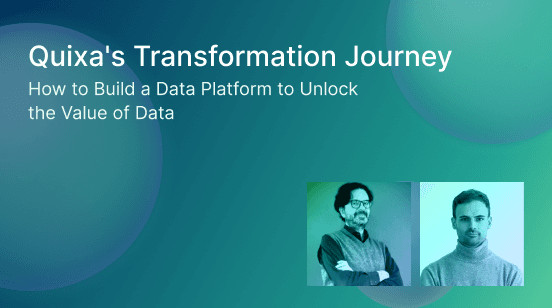
Quixa's transformation Journey
Quixa shares how it overcame the limitations of legacy systems by creating a modern and scalable Data Platform. The company leveraged a Digital Integration Hub (DIH) architecture to aggregate fragmented data from legacy systems into a unified Data Product, to be exposed to front-end touchpoints. This solution offloaded the core systems, ensuring high performance and reliability for digital touchpoints while streamlining data access for applications. The presentation will explore the key decision drivers, technical challenges, the adoption journey, and the results achieved, while also looking at how this project serves as a catalyst for future innovation.
AI Ready Architecture
Data
CALL FOR PAPERS
Have insights to share?
Together, we create the future. Be part of the conversation shaping tomorrow's platform!
Submit your talk and join our lineup
of Industry Leaders.
Submit your talk and join our lineup
of Industry Leaders.

PREVIOUS EDITIONSChapter 2024Chapter 2025
AN EVENT BY